Sports guide
How to Read Basketball Possession Sequences
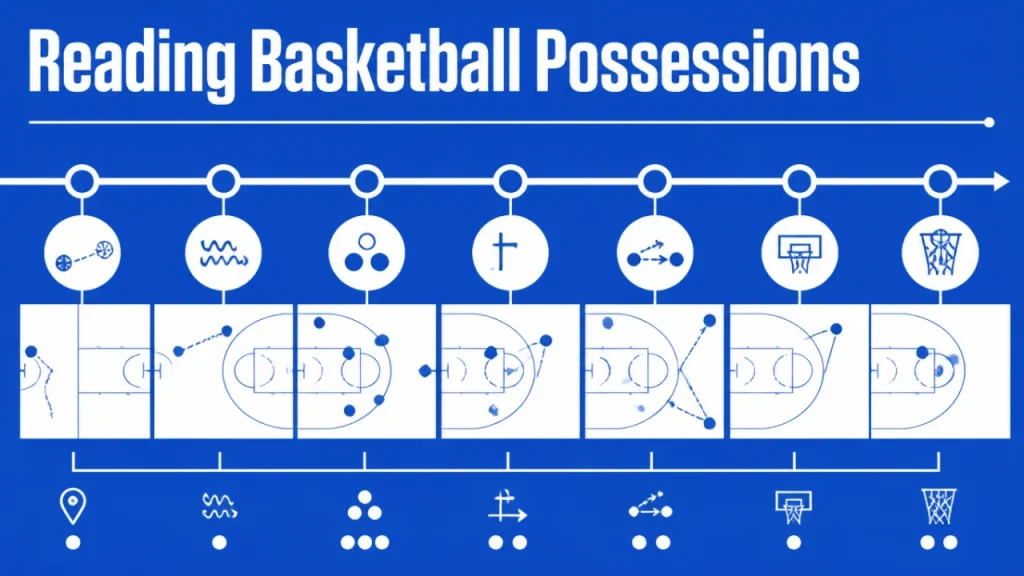
Basketball is a game of continuous action, but at its core, it’s a series of possessions. Each possession is an opportunity for a team to score, and understanding how these sequences unfold is key to appreciating the strategic depth of the game. For fans in the Philippines and around the world, knowing how to interpret the flow of possession can enhance your viewing experience, helping you anticipate plays and understand coaching decisions.
The Anatomy of a Possession
A possession sequence generally starts when a team gains control of the ball and ends when the other team gains control. This cycle involves several key events that dictate the flow of the game.
Beginning a Possession
A new possession typically begins in one of several ways:
- Jump Ball: At the start of the game or an overtime period, a jump ball decides initial possession. The team that gains control from the jump ball begins the first possession.
- Defensive Rebound: When an offensive team misses a shot and the defending team secures the rebound, it marks a change of possession. The defensive team then transitions to offense.
- Turnover: If the offensive team loses the ball to the defending team without taking a shot (e.g., a steal, an out-of-bounds violation, an offensive foul), possession changes.
- Made Basket: After a team scores, the opposing team typically inbounds the ball to start their possession. This is a standard transition of possession after points are scored.
Key Events Within a Possession
During a possession, several events can occur that influence its outcome or duration:
- Shots: A team attempts to score by shooting the ball. This is the primary objective of any possession.
- Rebounds: If a shot is missed, a rebound occurs. An offensive rebound means the shooting team retains possession and gets another scoring opportunity, effectively extending their possession. A defensive rebound, as mentioned, ends the possession for the shooting team and starts a new one for the rebounding team.
- Turnovers: A turnover is any action that results in the loss of possession to the opposing team without a shot attempt. Examples include traveling, double dribbling, offensive fouls, or a stolen pass. Turnovers are critical because they deny a scoring opportunity and give the opponent a chance to score.
- Fouls: Fouls can interrupt a possession. If a defensive foul occurs, the offensive team might receive free throws or retain possession with an inbound pass, depending on the situation (e.g., shooting foul, team foul count). An offensive foul, however, typically results in a turnover and a change of possession.
Reading a Possession Sequence: Hypothetical Examples
Let’s consider a few hypothetical scenarios to illustrate how to read possession sequences.
Scenario 1: Standard Scoring Play
Initial state: Team A has the ball after a defensive rebound.
- Team A brings the ball up the court.
- In this fictional sequence, a Team A player drives to the basket and makes a layup.
- End of possession for Team A.
- Team B then inbounds the ball and begins their possession.
In this example, Team A’s possession was successful, culminating in points. The change of possession is straightforward after the made basket.
Scenario 2: Offensive Rebound and Second Chance
Initial state: Team A has the ball after an inbound pass.
- Team A runs an offensive play.
- A player from Team A takes a jump shot, but it misses.
- A player from Team A secures the offensive rebound.
- In the same fictional sequence, Team A completes a pass and makes a shot after the offensive rebound.
- End of possession for Team A.
- Team B inbounds the ball.
Here, the offensive rebound extended Team A’s possession, giving them a valuable second-chance opportunity to score. This highlights the importance of crashing the boards.
Scenario 3: Turnover Leading to Fast Break
Initial state: Team A has the ball after a defensive rebound.
- Team A attempts to advance the ball up the court.
- A player from Team B steals the ball from Team A near mid-court. This is a turnover.
- Immediate change of possession to Team B.
- Team B quickly pushes the ball up the court for a fast break and scores.
This sequence demonstrates how a turnover can abruptly end a possession for one team and quickly initiate a high-percentage scoring opportunity for the other, often leading to exciting fast break points.
Why Understanding Possession Matters
Understanding these sequences allows you to appreciate:
- Pace of Play: How quickly teams transition from defense to offense.
- Efficiency: How often a team converts possessions into points. A high scoring efficiency per possession is a hallmark of a strong offensive team.
- Strategic Decisions: Why coaches might call a timeout after a series of turnovers, or emphasize rebounding drills.
- Momentum Swings: How a series of offensive rebounds or forced turnovers can shift the momentum of a game.
By focusing on these elements, you move beyond just watching the ball and start to see the strategic chess match unfolding on the court. Paying attention to these possession sequences provides a deeper appreciation for the tactical nuances of basketball.
AI-generated illustrative image. It does not depict a real match.